
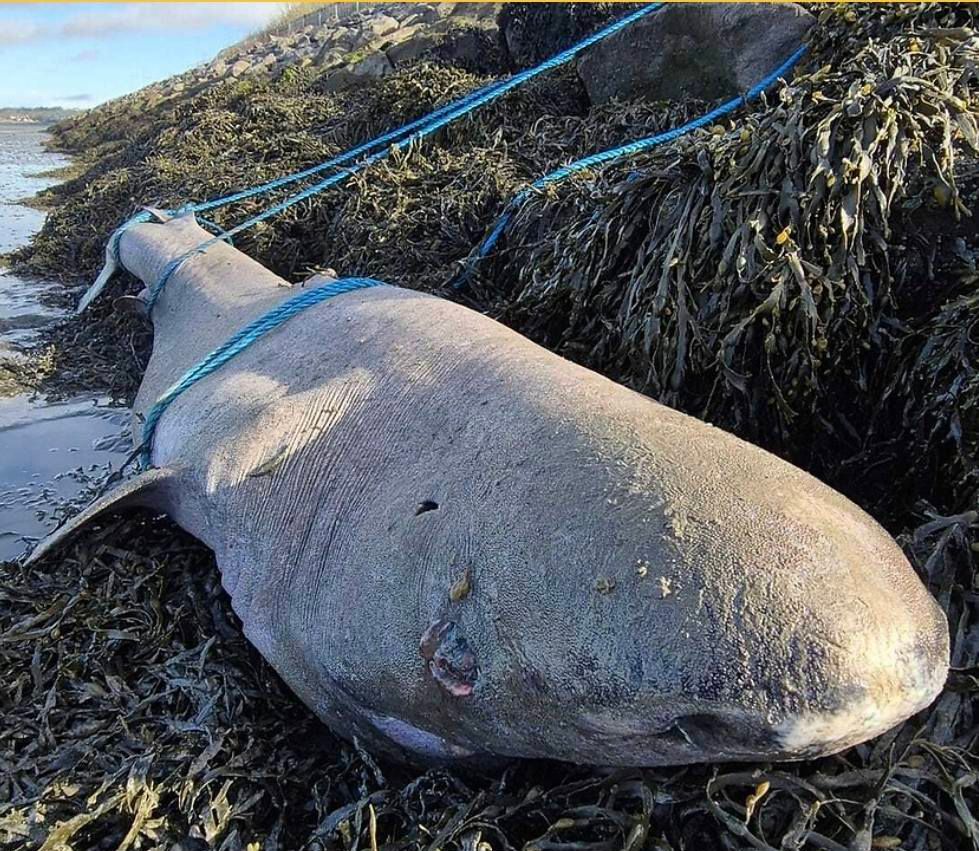
A rare deep-sea Greenland shark has been found dead off the coast of County Sligo, Ireland. It was likely washed ashore by a recent storm.
At first, witnesses assumed it was just a large, ordinary shark, but when specialists examined the photographs, it became clear they were looking at one of the least studied and most ancient shark species on the planet — the Greenland shark.
The Greenland shark can live for more than 500 years — older than entire eras and possibly having “seen” the world before major historical events. These creatures usually inhabit the icy depths of the Arctic and the North Atlantic and almost never appear near the shores of Ireland.
Scientists suggest:
- these sharks reach sexual maturity only at around 150 years of age (!);
- gestation may last up to 18 years;
- the discovered male was likely approaching this rare stage of life.
Witnesses — Hammad Chaudhry and James Winters O’Donnell — were the first to report the find and provided photographs and its location coordinates. The species was confirmed by marine researcher Taylor Chapple.
The specimen has now been transferred to the National Museum of Ireland, where extensive studies are expected to shed light on the mysteries of this “living relic.”
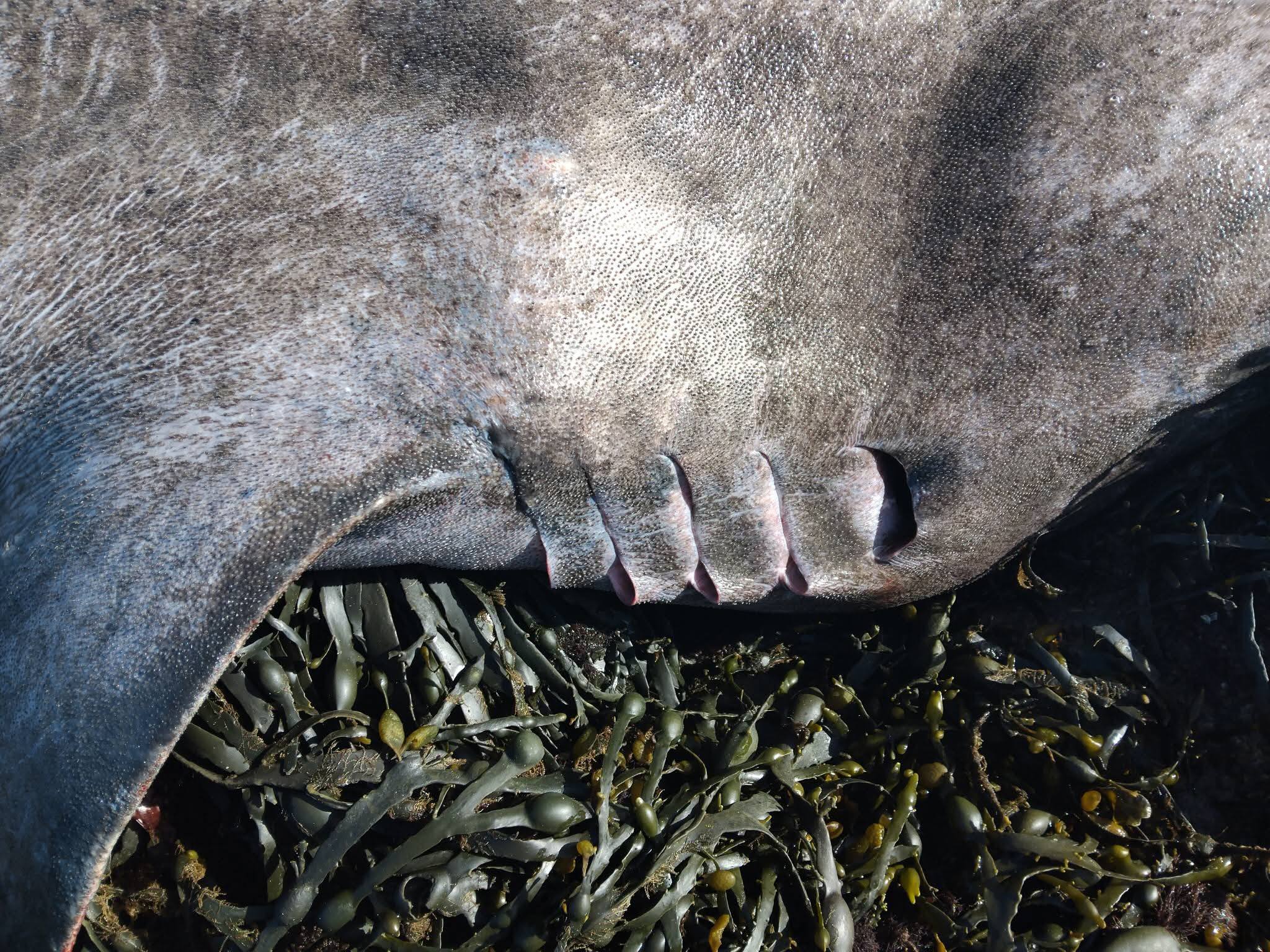
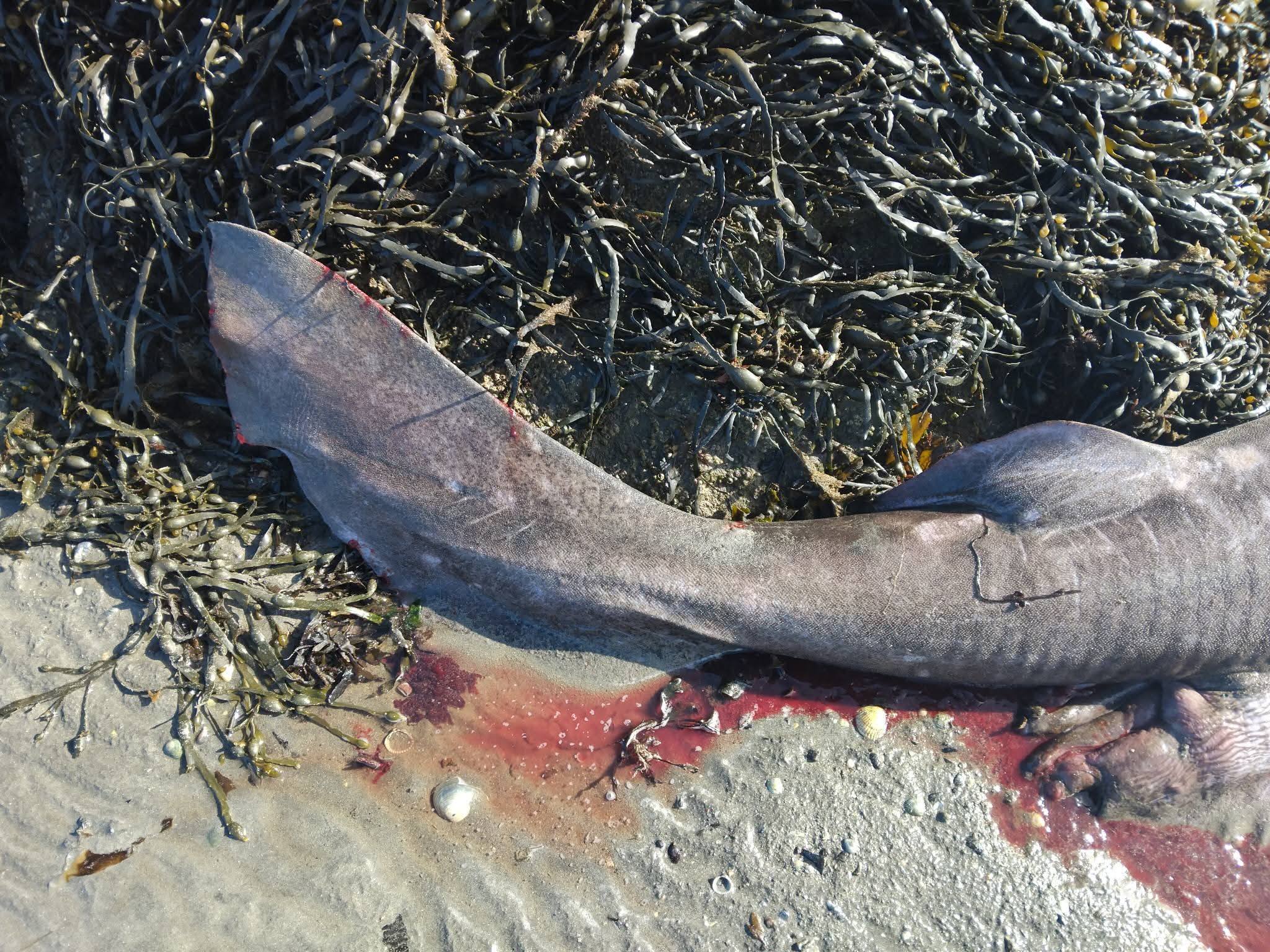
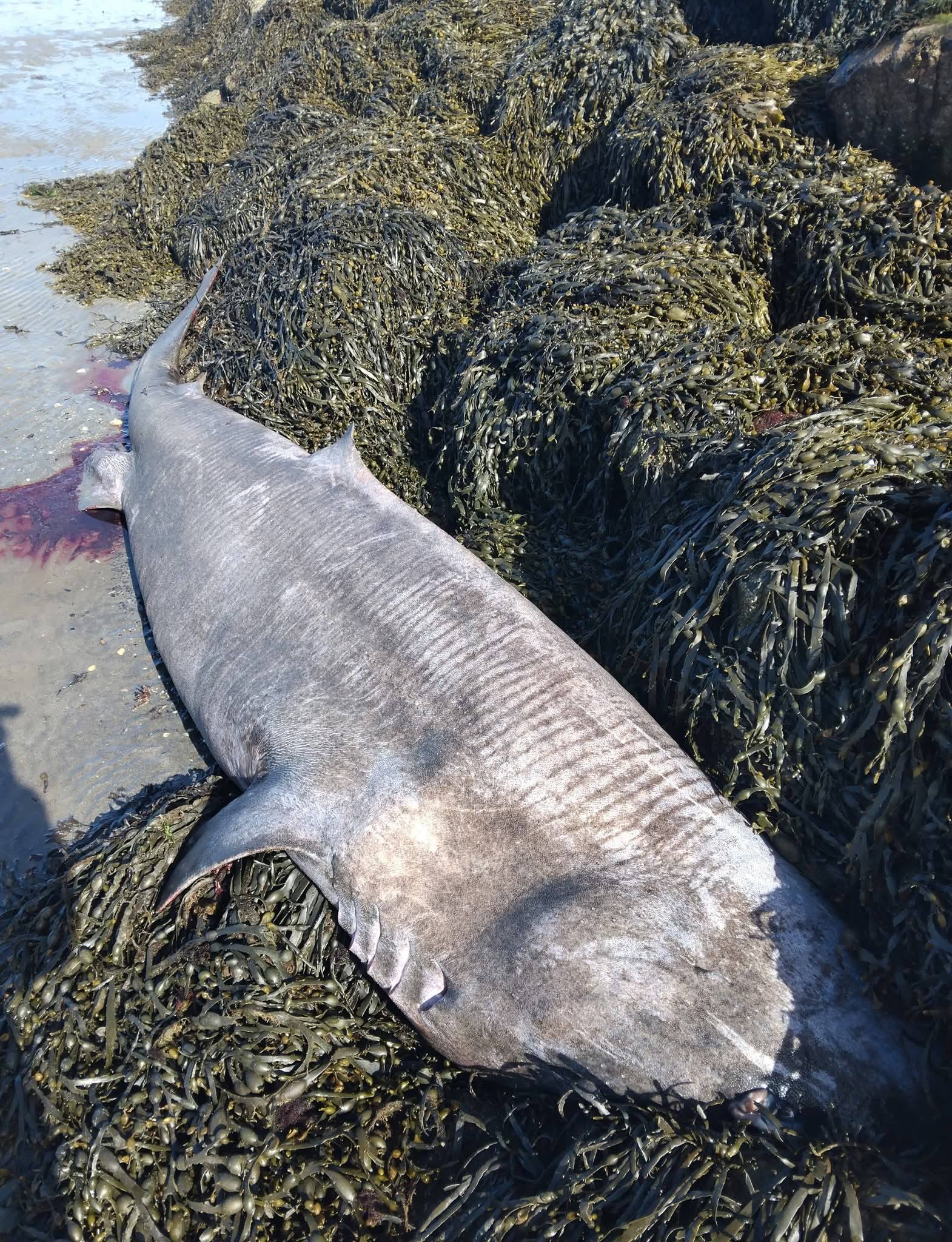
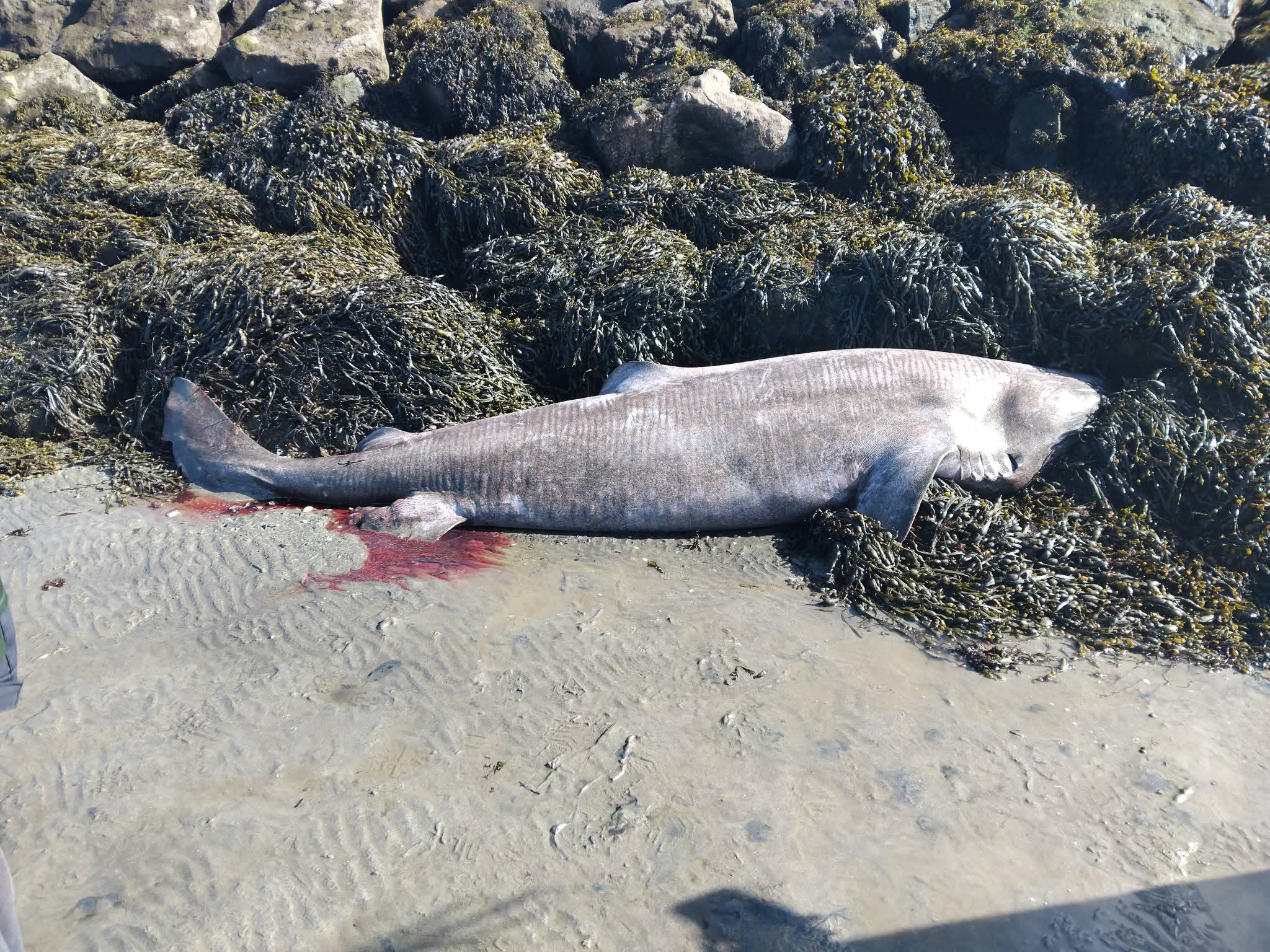
Volunteers and rescue teams have already described the find as one of the rarest in recent years. The key question now is: what forced this ancient fish to rise from the depths — and could this be an alarming signal of changes in the ocean’s habitat?
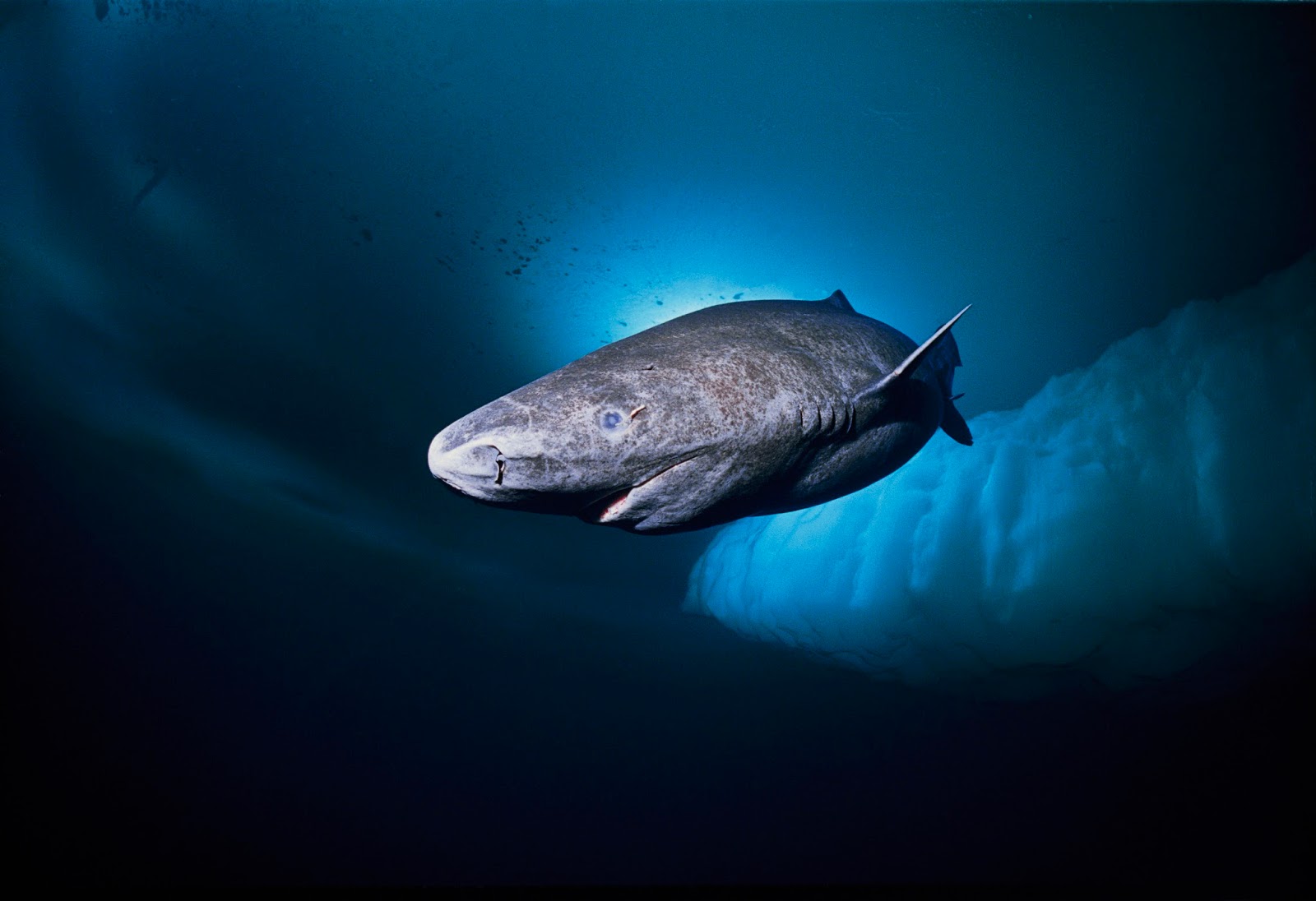
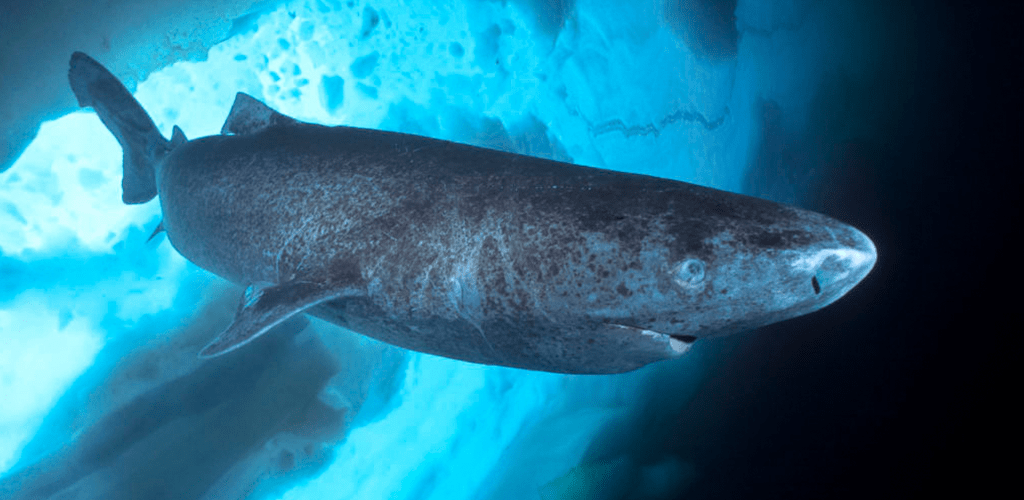
Greenland shark (Somniosus microcephalus) is the longest-living vertebrate on Earth, capable of reaching an age of 400–500 years. It inhabits the cold waters of the Arctic and the North Atlantic, typically at depths of 200–1200 m, but can descend beyond 2200 m. These slow-moving predators have an extremely low metabolism, which contributes to their exceptional longevity.
Key facts about the Greenland shark:
- Longevity: Studies of eye lens tissue indicate that large individuals exceed 300–400 years of age.
- Habitat: They prefer temperatures from -1 to +10 °C and live in deep waters with little to no light.
- Species traits: These sharks have an extremely slow metabolism, and sexual maturity occurs very late (likely around 150 years of age).
- Diet: They are both scavengers and predators, feeding on fish, seals, and even the remains of large marine animals.
- Vision issues: Most individuals host parasitic copepods on their eyes, though this does not significantly hinder their ability to navigate in the dark.
- Threat to humans: They pose little danger due to their habitat, although their flesh is toxic (contains trimethylamine oxide) unless specially processed.
Photos: afloat.ie and Nature Learn
Source: travelworld.biz