
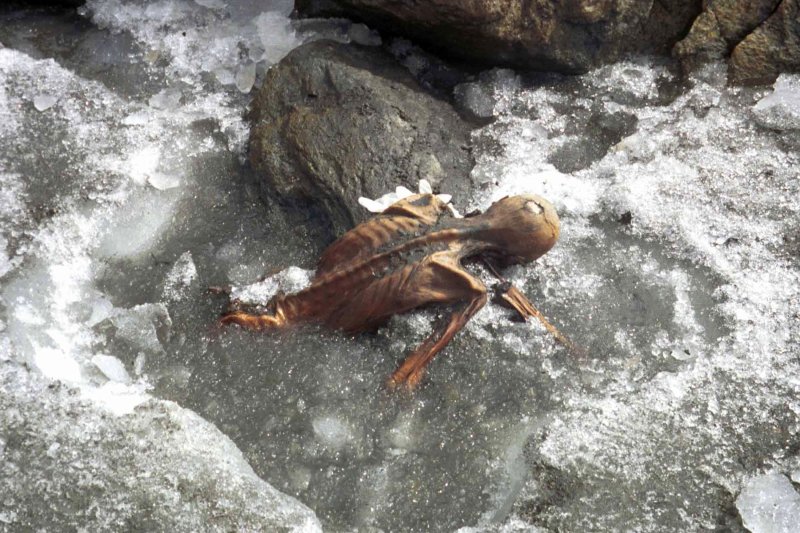
At first, he was mistaken for a dead mountaineer. The body had only half-thawed out of the glacier, and it seemed that the unfortunate man had died relatively recently. The conclusion of the scientists who examined the body and the objects found nearby was initially shocking: in the Otztal Alps, right on the border between Italy and Austria, they had discovered a man who had lived more than 5,000 years ago, at a time when our civilization was still in the early stages of its development. It has already been 35 years since the discovery, but research into it continues.
The “Iceman” (Otzi) became a unique source of information about how the distant ancestors of Europeans lived, what they ate and what they wore. His life ended high in the mountains around 3300 BC.
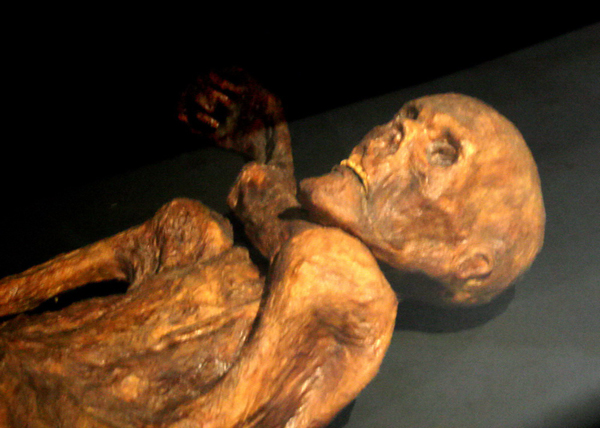
Date of birth: around 3350 BC.
Date of death: around 3300 BC. He was about 45 years old.
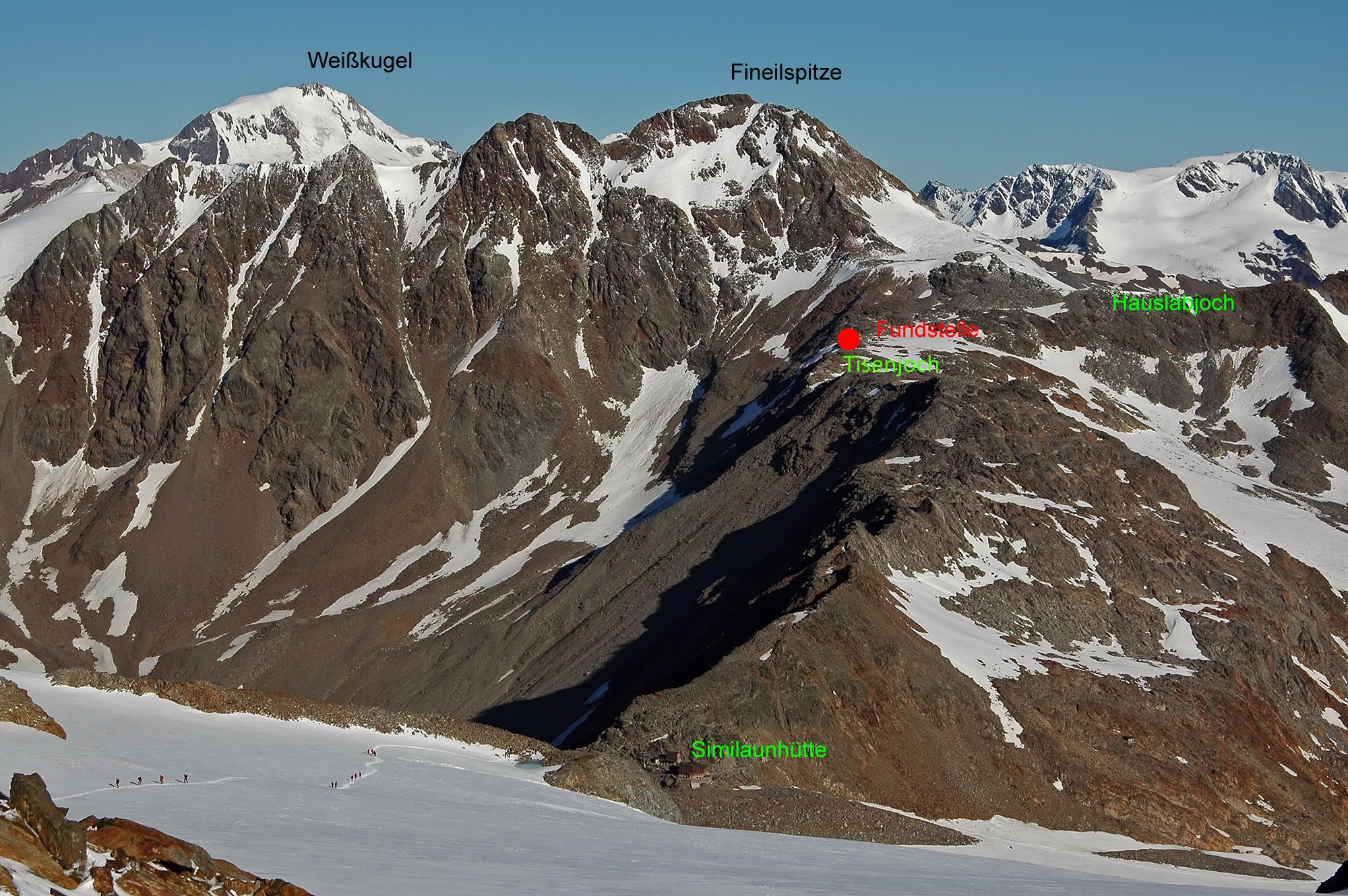
Place of death: slope of Mount Similaun, Otztal Alps, on the border between Austria and Italy.
The Discovery
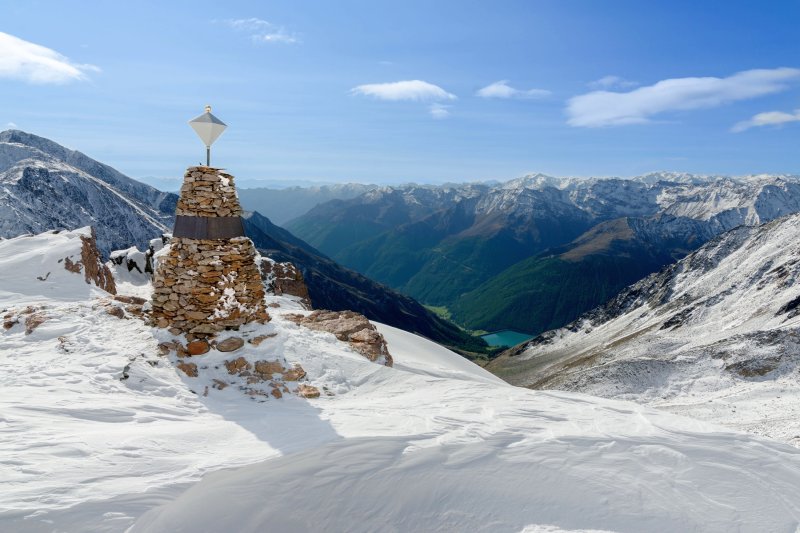
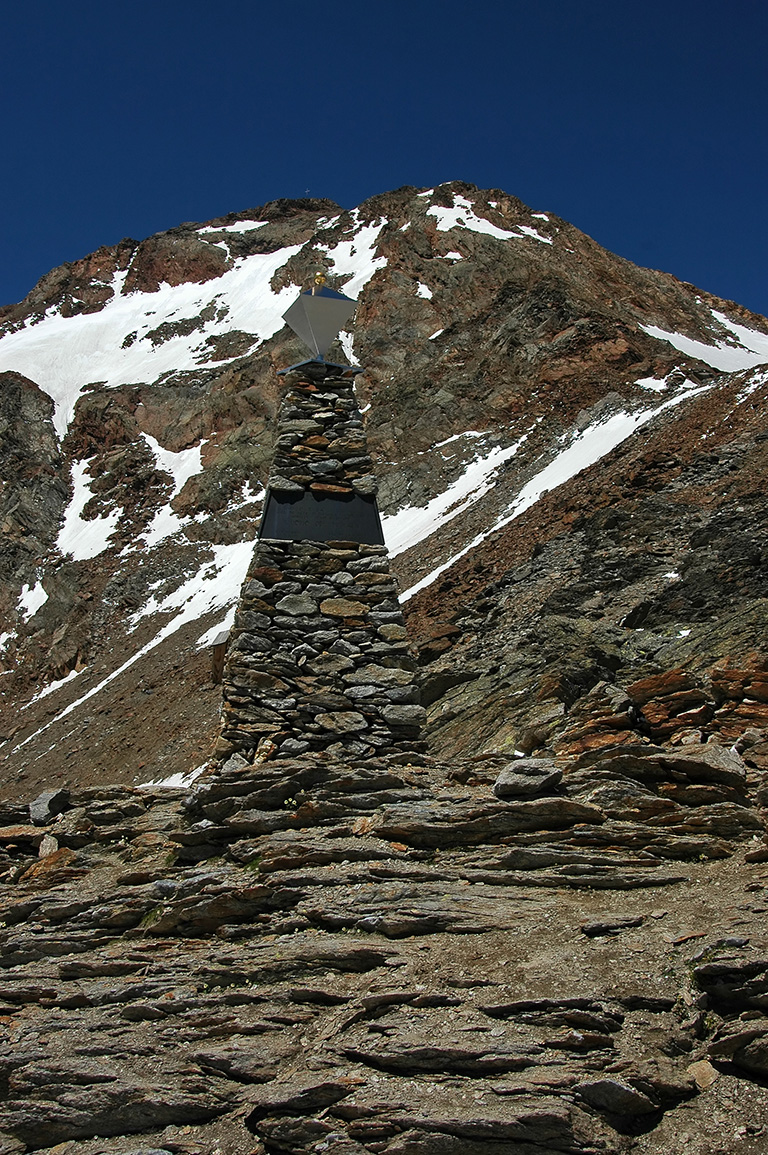
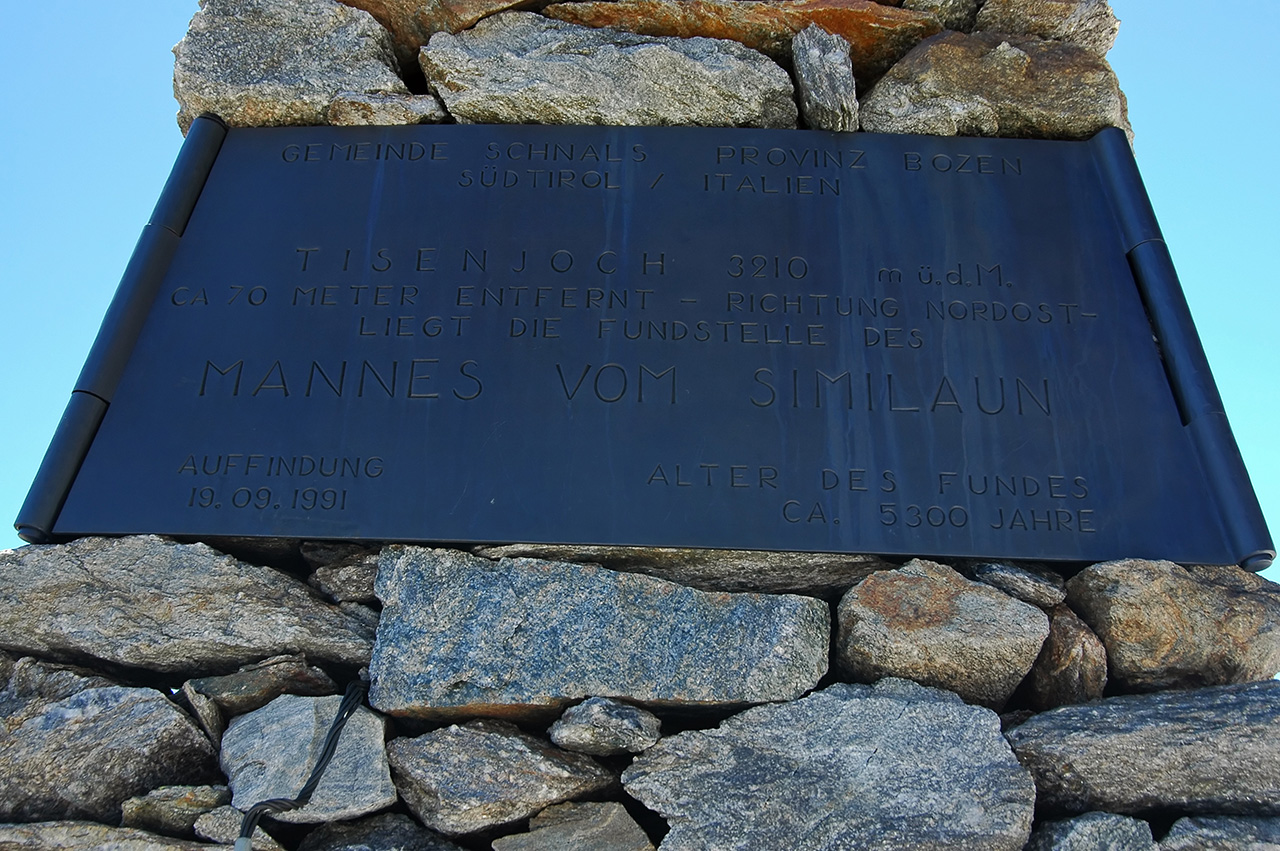
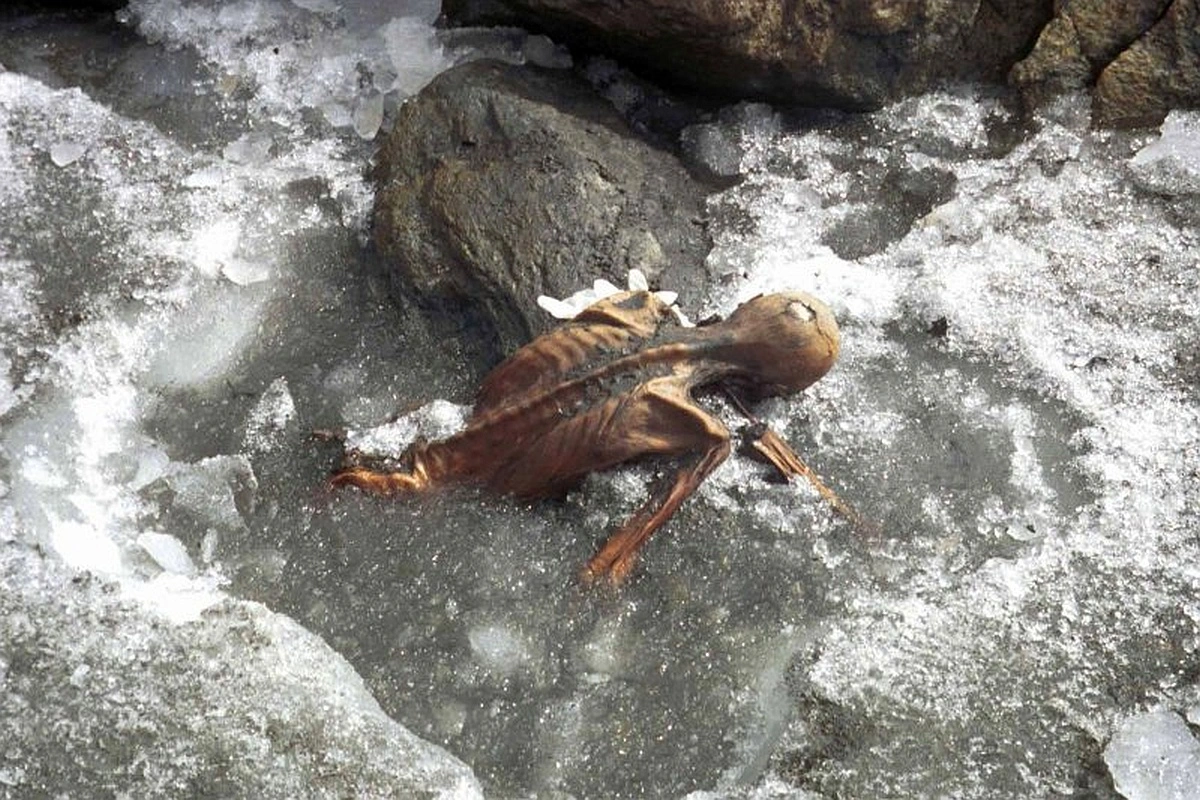
On the sunny day of September 19, 1991, Helmut Simon, a librarian from Nuremberg, Germany, was hiking with his wife Erika in the Otztal Alps, a mountain range on the Italian-Austrian border. At around 1:30 p.m., while crossing between the Tisenjoch and Hauslabjoch passes, they walked past a hollow filled with ice and meltwater and noticed something unusual. The strange object turned out to be a human corpse, or more precisely, its upper, twisted half — the lower part of the body was still frozen into the glacier. The German tourists reported their discovery to the keeper of the nearby Similaun mountain hut. The next day, attempts were made to fully extract the dead man from the ice. “We thought it was a mountaineer or skier who had had an accident, perhaps two years or even ten years earlier,” Helmut Simon later told journalists.
There was nothing unusual about such stories. People who find themselves in extreme situations in the mountains often remain there forever. Sometimes the dead are simply never found, and sometimes recovering their remains, especially from high altitudes, is too difficult. On the slopes of Mount Everest alone, around 200 climbers who became victims of the highest mountain on the planet still remain. The most famous example is “Green Boots,” the body of a climber in bright green boots that has been lying in a small cave at an altitude of 8,500 meters since 1996. The altitude at which the Simons found their mummified corpse was much lower — 3,210 meters above sea level — so the couple decided, with the help of rescuers, to bring it down.
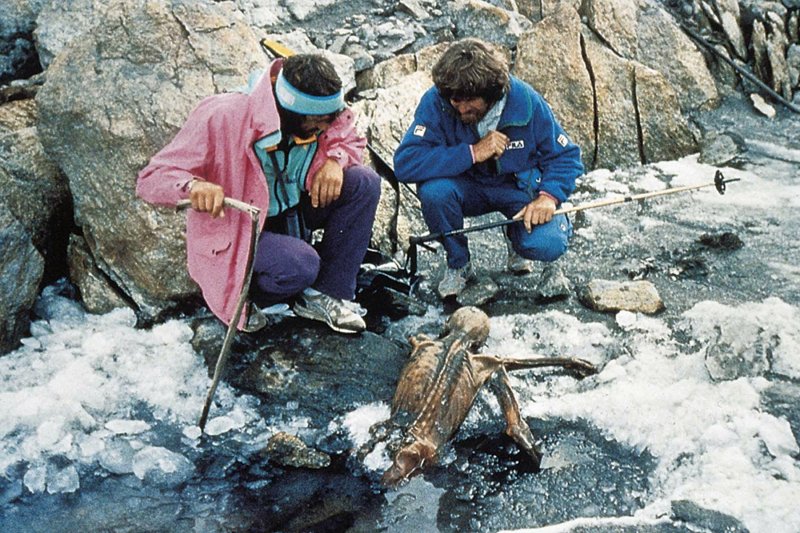
Because of bad weather, the body could only be removed from the glacier on September 22. A day earlier, a group of mountaineers had happened to pass by, including the famous Italian mountaineer Reinhold Messner, who also took part in the operation. Nobody yet understood how valuable the discovery was, so the mummy, which was being extracted with improvised tools such as ice axes, was slightly damaged.
On September 24, in the morgue in Innsbruck, Austria, where the body had been taken, it was examined by archaeologist Konrad Spindler from the local university. He was the first to establish that the body discovered on the slope of Mount Similaun was not an unfortunate modern mountaineer, but a man from the Copper Age who had lived in prehistoric Europe.
In the press, the mummy received the nickname Otzi, after the nearby Otztal mountain valley. Other names included “the Iceman,” “the Man from Similaun,” and “the Man from Hauslabjoch.” His discovery became a true sensation both in the media and in scientific circles. “Bog bodies,” mummies preserved in peat bogs, were already widely known, but until then, ice had mainly yielded archaeological artifacts, not human remains of this kind. In addition, for example, the “Tollund Man,” the most famous and well-preserved of the bog bodies, lived around the 4th century BC. In the Alps, however, the age was completely different: Otzi died at the turn of the 34th and 33rd centuries BC, about 5,300 years ago. It was an era when the first, still legendary pharaohs were beginning to rule in Ancient Egypt, when writing had already appeared in Mesopotamia and agriculture was developing, while Europe still lagged behind those southern regions by several centuries. Otzi died at the dawn of civilization.
Research
The conditions in which the “Iceman” remained helped preserve his body in relatively good condition. It had lost its epidermis and hair and had dried out, but a careful study of Otzi allowed scientists to reconstruct even his appearance. At the time of death, he was about 45 years old — a very advanced age for that period. Judging by the condition of his teeth and joints, his body was already quite worn. Even in the fresh air of the Copper Age, without industrial pollution and eating only natural food, people still aged quickly. Otzi was 165 centimeters tall and weighed only 50 kilograms.
Analysis of the contents of his stomach and intestines made it possible to determine the dead man’s diet. He had eaten for the last time several hours before his death, and the “Iceman’s” menu included two types of meat: chamois and deer, most likely in the form of dried pieces, as well as bread and roots. Remains of blackthorn berries, poppy seeds, barley and flax were found near the body, probably from Otzi’s bag.
About 30 different types of pollen were also found in his intestines. The plants to which this pollen belonged helped determine where Otzi had lived. Most likely, the man was born and grew up in the Vinschgau valley system in South Tyrol. The condition of his muscles suggested that he was used to moving across rough terrain, possibly while grazing sheep on high mountain pastures.
The mummy itself had lost its hair, but a large amount of hair was found near the body and most likely belonged to him. Its analysis made it possible to reconstruct the “Iceman’s” hairstyle and determine that he had a beard. The high copper content is associated with the idea that Otzi may have been involved in copper extraction.
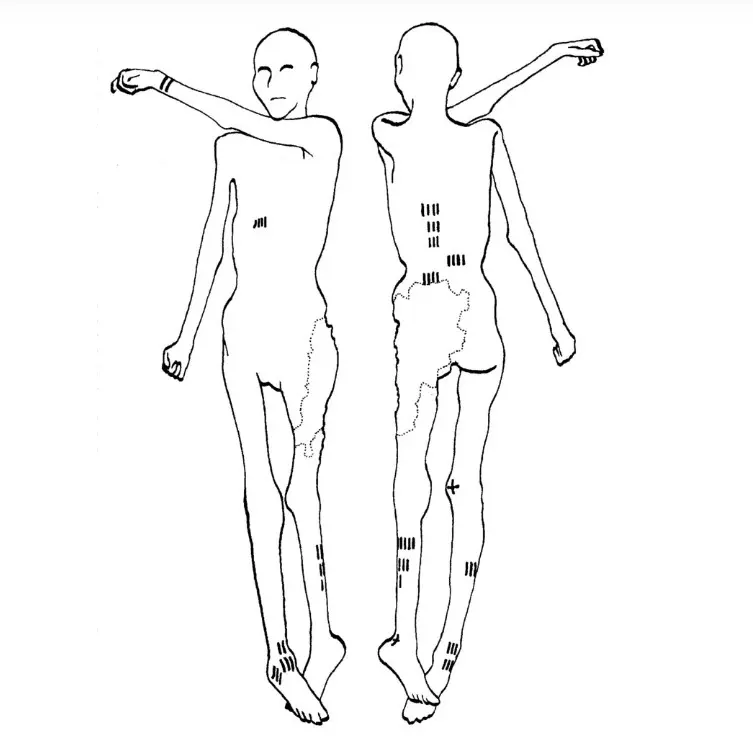
About 60 different tattoos were also found on his body. In most cases, they consisted of parallel lines on the ankles, calves, near the spine and on the wrist — 19 groups in total, with each line measuring 1 to 3 millimeters wide and 7 to 40 millimeters long. Single cross-shaped tattoos were found on the inside of one knee and on the right ankle. According to specialists, all these marks, which may have reflected certain rituals, were made by small cuts in the skin into which pigment obtained from wood ash was added.
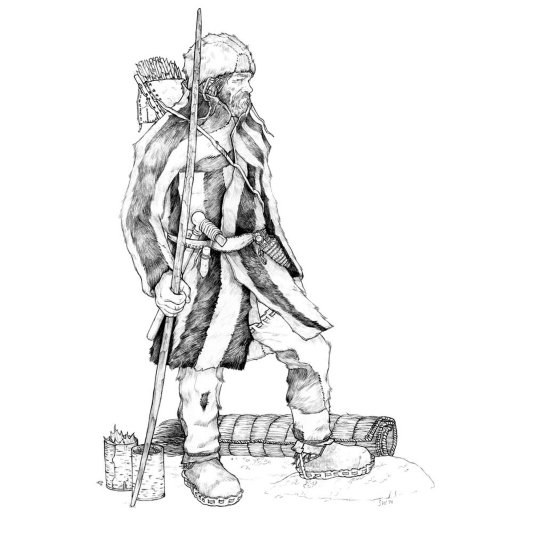
Otzi was dressed in a full set of clothing made from the skins of various animals, including sheep, goats and cattle: a cloak, trousers with a loincloth, a belt and shoes with wide soles, most likely specially designed for moving through snow. A layer of grass was found inside the shoes, providing additional insulation. Over all this, the Copper Age man wore a woven straw cloak, and on his head he had a cap made from brown bear fur with a leather strap. The wooden frame found nearby was probably part of some kind of backpack.
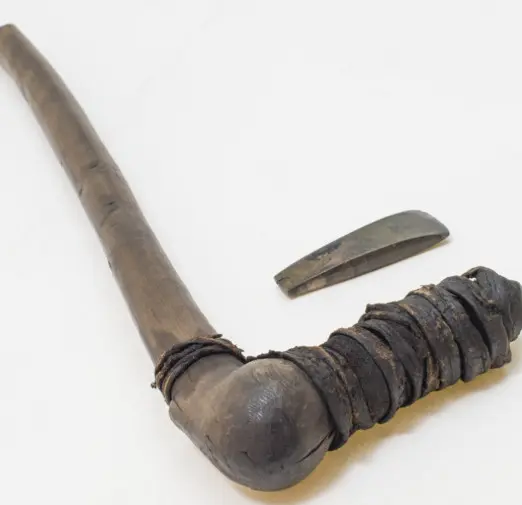
Otzi had a whole set of items with him. Archaeologists were especially amazed by a well-preserved copper axe with a 60-centimeter yew handle. The other objects were more primitive: a stone knife, a flint scraper and a bone awl. A pouch containing dried tinder fungus was probably used with flint as a fire-starting tool.
The largest artifact was a 182-centimeter wooden yew bow, although it was clearly unfinished. In the final days of his life, Otzi had been making himself a bow for some reason, and scientists have their own theories about this. A leather quiver was also found with him, containing 14 arrows with bone tips, only two of which were complete.
Examination
At the time of death, Otzi was approximately 165 cm tall, weighed about 50 kg, and was around 45 to 50 years old. The mummy weighs 38 kg; the ice that covered the body immediately after death slowed the process of decomposition. Analysis of pollen, dust particles and tooth enamel showed that Otzi spent his childhood near the present-day village of Velturno, German Feldthurns, north of Bolzano, and later lived in valleys located 50 kilometers to the north.
The stomach contained remains of bran, roots, fruit and two types of muscle tissue corresponding to chamois and deer meat. Otzi had his last meal about two hours[4] before his death. The high copper and lead content in his hair suggests that Otzi may have been connected with copper production. Scientists believe that this man may have belonged to a small tribe mainly engaged in agriculture.
Computed tomography showed that three or four of his right ribs were crushed after death. In addition, the epidermis was missing from the body, which was a result of natural mummification in the ice.
After studying the proportions of the lower leg, thigh and pelvis, Christopher Ruff concluded that Otzi’s lifestyle required frequent movement through hilly terrain. Such a degree of mobility was not typical of other Europeans of the Copper Age. Ruff believes that Otzi was a shepherd in high mountain areas.
How Otzi Died
For a long time, the generally accepted version of the circumstances of the “Iceman’s” death was the theory proposed by Konrad Spindler, the University of Innsbruck scholar who was the first to gain access to the mummy. According to the archaeologist, Otzi froze in autumn after being caught in a snowstorm at an altitude of 3,210 meters. Apparently, by that time he had been involved in some kind of conflict, as a result of which he not only lost his weapons, forcing him to start making a new bow, but also suffered internal injuries, including several broken ribs. Trying to escape his pursuers, he climbed to the pass near Hauslabjoch, where winter had already begun at that time of year. There, exhausted, he tried to shelter from the bad weather in a small gully measuring 3 by 7 meters, where he died of hypothermia.
Spindler presented this theory in 1994. During later research on Otzi, it became clear that the reconstruction of his death needed to be revised. In 1998, pollen from hop-hornbeam was found in the dead man’s intestines. This tree usually blooms in March and April, meaning that the “Iceman” must have died in spring.
In 2001, during an X-ray examination of the mummy, a deeply lodged arrowhead was found in his left shoulder. A matching hole was found in the corresponding place on Otzi’s cloak. In addition, traces of blood from four different people were found on various objects: on the knife, on one of his arrows and on the cloak. Apparently, Otzi was in fact killed. Trying to remove the arrow that had struck his shoulder, he broke its shaft, but the arrowhead remained inside. Whether he died from blood loss or froze during a snowstorm is difficult to say. In spring, at an altitude of 3,210 meters, it is still winter, and anything can happen there. One way or another, this shepherd gave up his life dearly 5,300 years ago.
These are only the most popular and plausible versions of what happened. Of course, an archaeological discovery of such significance gave rise to many more theories about the fate of Otzi. Some researchers believe that he was offered as a ritual sacrifice. Other scientists claim that he died in the valley and was then buried by his fellow tribespeople on the high mountain pass.
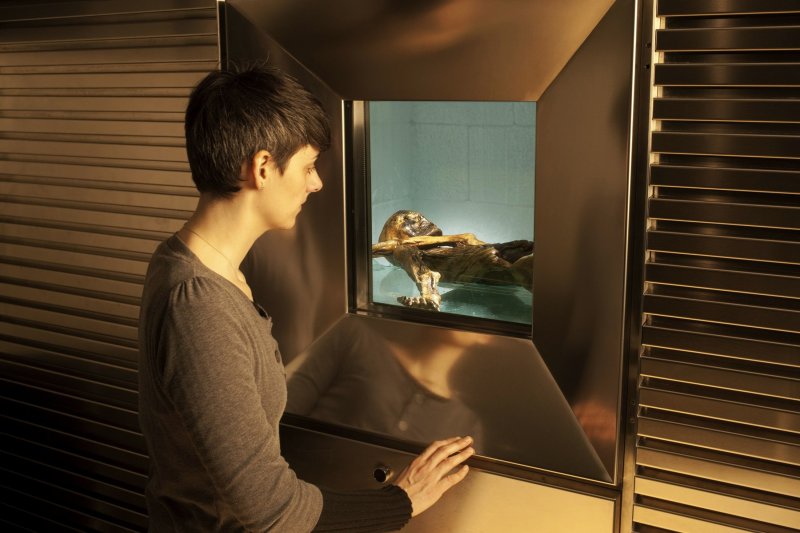
There are even people who believe in a so-called curse of Otzi, similar to the curse of Tutankhamun. Several people directly involved in his discovery and later research did indeed die deaths that could be described as premature. Helmut Simon, the German tourist who found the mummy, died in a mountain accident. Archaeologist Konrad Spindler, who conducted the first studies of the mummy, died at the age of 65 from amyotrophic lateral sclerosis. But all this, of course, is coincidence. Thousands of people have been involved in the study of the ice mummy, which is now displayed in the South Tyrol Museum of Archaeology in Bolzano, and naturally some of them later died for one reason or another.
Source: travelworld.biz